Today I’m going to give a super brief case update, then a discuss the potentially upcoming WHO Pandemic Treaty.
COVID Update: First, we had a wave of COVID cases late last Summer and another one this Winter. According to official reporting, both of these waves were small, with few officially recognized cases. A lot of people in my area of San Diego County had upper respiratory infections, but most people weren’t even that interested to know if it was COVID, a cold, or the flu. Several people I know had illnesses that turned into bacterial infections like sinusitis or bronchitis. COVID wasn’t known to generate bacterial infections, so these cases probably weren’t COVID. All this to say, COVID is now deep into the endemic phase, with COVID becoming just another respiratory infection for most people.

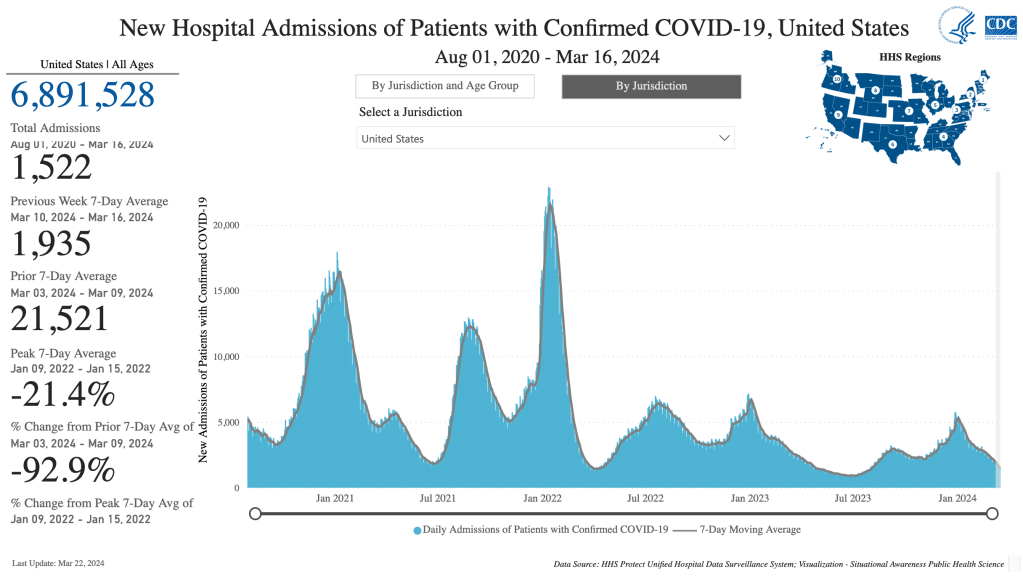
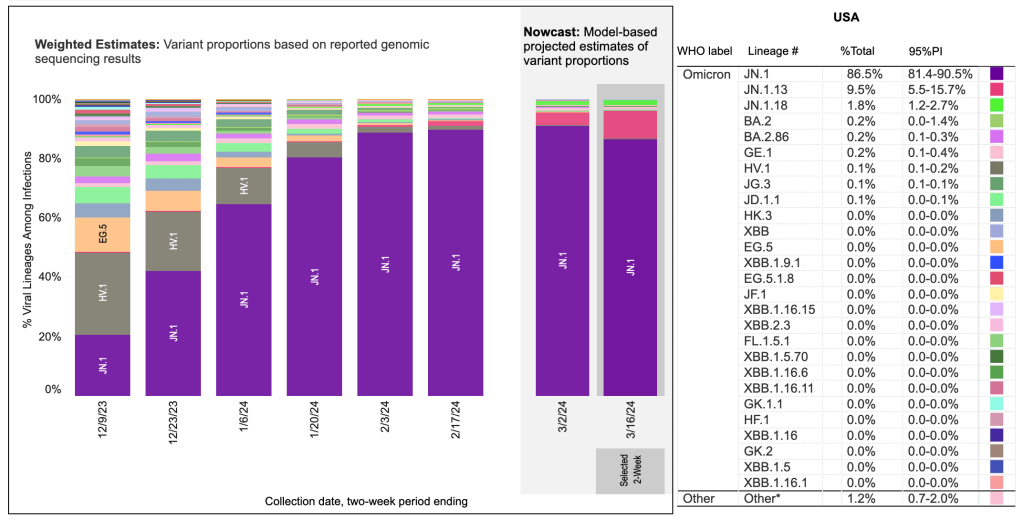
16th, 2024. The current most common COVID variant is JN.1, an Omicron variant.
A brief note on Respiratory Syncytial Virus (RSV). The common cold is causes by any one of several classes of viruses, including Rhinovirus, Adenovirus, some Coronoviruses, and RSV. Everyone has had RSV several times in their life. While infants can have severe symptoms because of RSV, for adults, RSV infection will result in just a cold, although some can produce a bacterial infection. In my informed but not expert opinion, no adult, except perhaps new parents, needs an RSV vaccination. I’m a little baffled by the push for the RSV vaccine this year. I’ve never seen a campaign to encourage his before. Of course, always consult your physician when making medical decisions.
W.H.O. Pandemic Treaty: The World Health Organization (WHO), an agency of the United Nations, is currently negotiating an international treaty called the WHO Pandemic Agreement (full text). The agreement attempts to standardize pandemic responses internationally. Many medical freedom advocates have criticized the agreement for forcing countries to adopt practices that infringe on individual rights and also produced poor outcomes in many nations during COVID. The UN currently plans to hold a vote on the treaty in May of this year.
The WHO was the first international body to be public about the SARS-2 virus in January of 2020. Some of their claims at that time were demonstrably false, even when they were made, including that SARS-2 was not transmissible between humans, and that the virus was not transmissible through the air. They adopted some of the same draconian lockdown measures promoted by China at a time when the less restrictive measures used by Japan, South Korea, and Taiwan were proving to be more effective. Western nations, including the US and the CDC, quickly promoted the WHO as the standard for COVID practice and information. Disagreeing with or speaking out in opposition to WHO measures quickly became heavily discouraged on online platforms, and would even cause physicians, nurses, and pharmacists to lose their jobs. The California Physician Misinformation Act of 2022 attempted to have doctors lose their medical license for promoting information that contradicted the WHO.
The new Pandemic Treaty seeks to force countries to make laws enforcing the WHO pandemic plan. Aspects of the treaty include the restriction of “misinformation”, the automatic granting of licenses and liability waivers for vaccines, and surveillance of personal medical and social media information. It would also require an international vaccine passport.
In an interview with Kim Iversen, Dr. Meryl Nass argues that the treaty would violate the 1st, 4th, 5th, 10th, and 14th amendments to the US Constitution.
Given the terrible record of the WHO and the CDC during the pandemic, especially for restricting free communication. I absolutely oppose a WHO lead pandemic treaty.
Will the US adopt such a treaty? It’s hard to say right now. The current makeup of Congress suggests that it might be difficult to get a treaty passed, especially since a two thirds vote is necessary to ratify a treaty in the Senate. The President can make an agreement by executive order, but a future president can reverse this order just as easily.
The US vaccine mandate suggests that the Federal Government, some states, and many companies may implement many aspects of the treaty whether or not the US agrees to it. Remember that President Biden announced that he intended to issue a vaccine mandate in September of 2021. Details weren’t released until November that year, and the Supreme Court actually struck down the mandate before it could be implemented in January of 2022. So in actuality, the mandate never actually existed. Despite this, many states, federal agencies, hospitals, and companies implemented aspects of the mandate voluntarily, with Federal pressure never officially exerted. This is a bad sign for the WHO pandemic treaty.
The good news for some is that the 10th amendment may allow states to ignore an agreement if they want. The 10th amendment states “The powers not delegated to the United States by the Constitution, nor prohibited by it to the States, are reserved to the States respectively, or to the people.” On the other hand, a treaty ratified by congress has the force of federal law and may bind the states. It remains to be seen how the Supreme Court would weigh an official treaty ratified by Congress against measures that would violate the constitutional rights of individual citizens.
A note on the words “treaty” and “agreement”. In the US, a treaty has the force of law and must be ratified by congress. An agreement can be made between any 2 parties, but does not legally bind anyone else. News outlets have been using “treaty” and “agreement” interchangeably, and the official name for the draft document from the WHO is “the WHO Pandemic Agreement”. Given that the WHO wants the agreement to carry the force of law, they really mean “treaty”. The confusion may be intended.
As I have stated many times before, the censorship of physicians, scientists, and others during the pandemic crippled our ability to respond correctly to the pandemic. Many, including me, lost trust in the CDC and the medical community as a whole. I regard this as one of the worst aspects of the US pandemic response, and particularly bitter for me as a member of the medical community. The WHO Pandemic Agreement would codify the worst aspects of the US COVID response.
As the May vote nears, write your representatives, both at the federal and state levels, and let them know if you want the agreement implemented in your area.
Don’t fear, but be smart,
Erik
What went wrong with the US response to COVID?
What we should do in the next pandemic.
Science Magazine article on the Pandemic Agreement:
 doubloondiagnostic.com