This a cancer update. I’ll talk about continuing challenges with recovery, a great PET scan result, and I’ll revisit my post on suffering.
Overdoing it: In my last update, I wrote about my triumphant climb up a local peak, using my newly added lung capacity after a cold. The next day, however, I was surprised to discover that my sore torso muscles were even more sore. As an aside, my physical therapist said this should be no surprise that after walking only on sidewalks for months, a lot more muscles are needed to walk on a rugged trail!.
It’s been a month since then, and my abs, back and side muscles on the right side continue to be very grumpy, keeping me from going on my longer walks, and occasionally even preventing me from sleeping. I’ve sometimes been discouraged by the regression of some of my capabilities, and I’m even trying to re-dial in my pain meds.
Kathy suggested that maybe my nerves near my broken rib are healing, and maybe this is causing some extra pain, kind of like how a cut may become more sensitive a week or so after it starts healing, as the nerves in the area start working again. This seems to be true. I have some patches of skin that used to be numb that are no longer numb, and others that now feel normal! So my nerves are recovering!
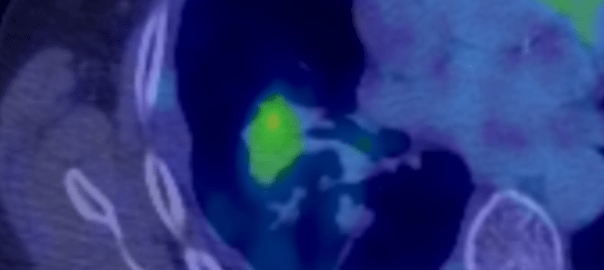
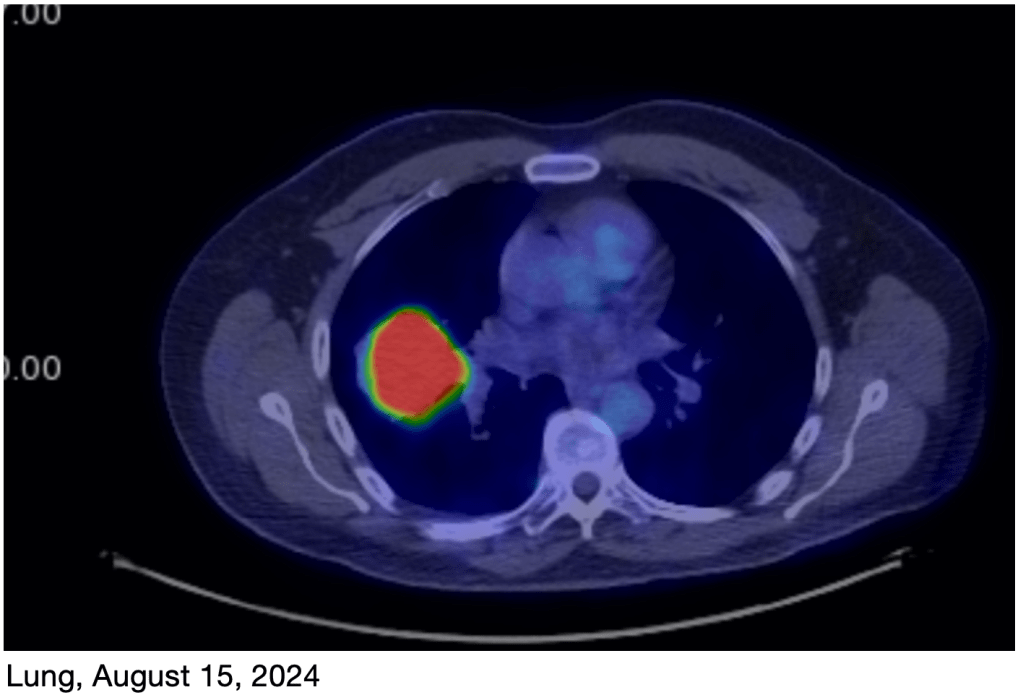
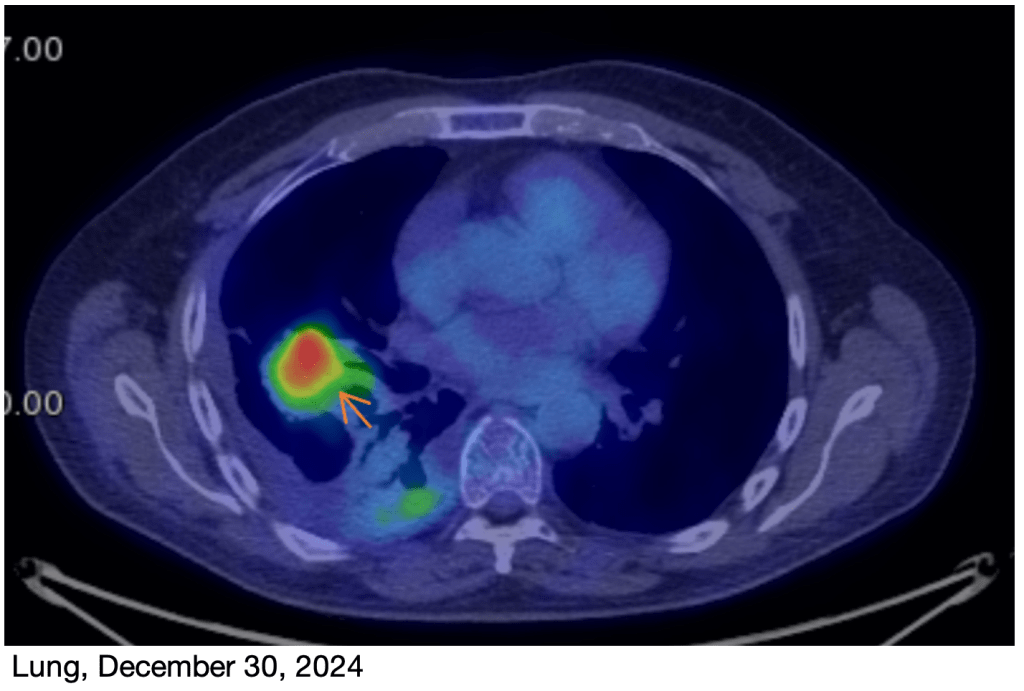
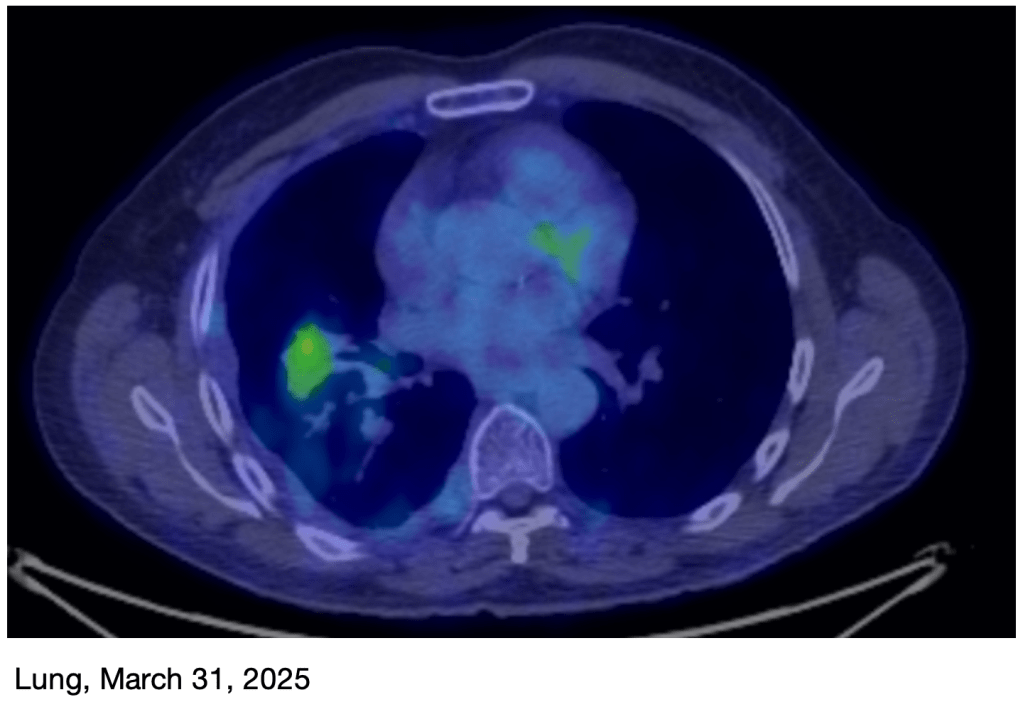
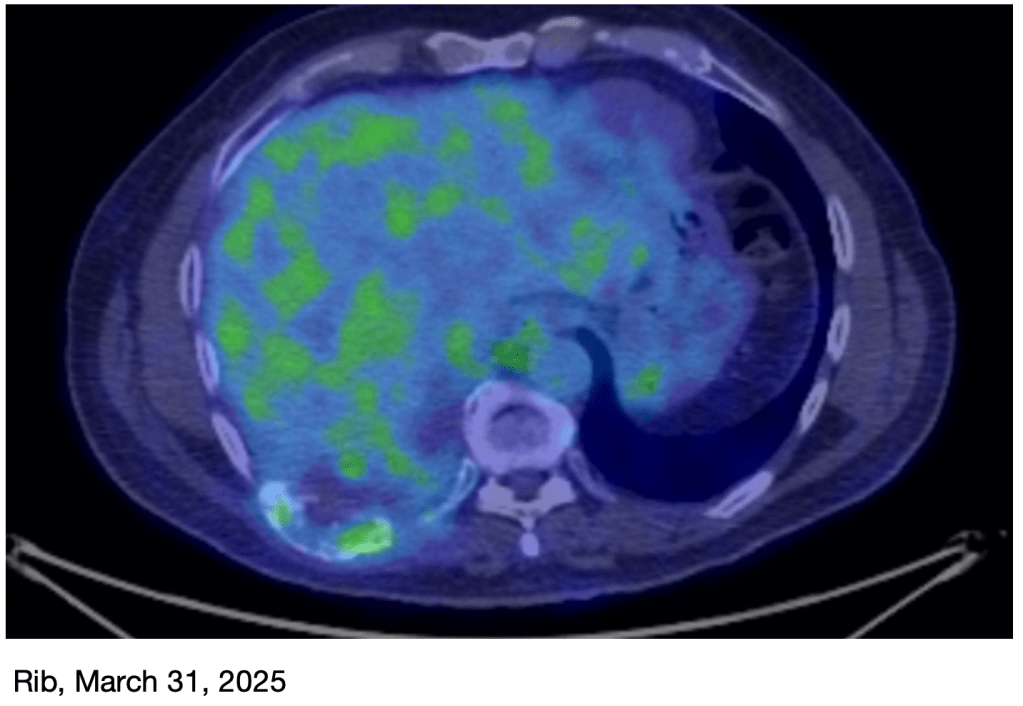
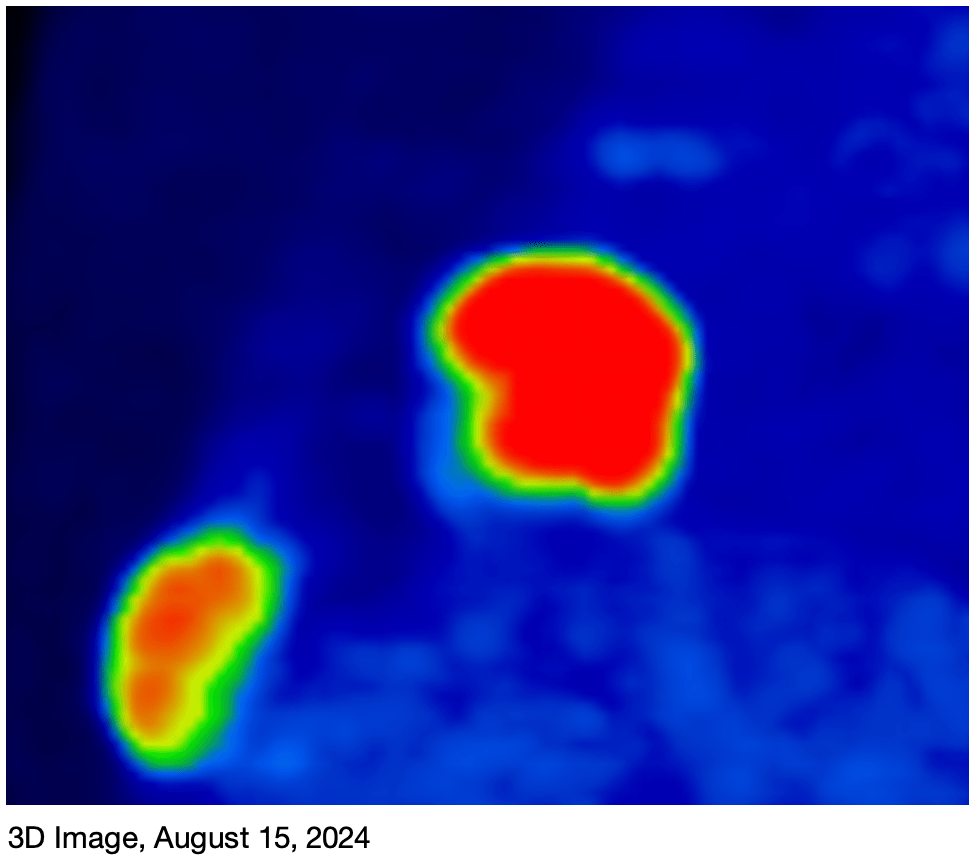
March PET Scan: I just had a new PET scan on Monday, and the results are great! The tumor on my rib is basically gone, and the primary tumor in my lung is now very small, just a faint reminder of what it was! This is obviously great news! I’ll have another scan in June.




Suffering, Part 2: This section contains significant Christian content. Way back in October, I wrote a piece on suffering. The slow recovery of my torso muscles has caused me to reconsider this topic, and I’ve realized recently that the piece had a few key missing parts. A video I saw recently offered a commentary on those missing parts. The below video is humorous and charming but is also required watching for what I write next:
The little English girl is complaining about her great suffering to her mother. She implies that she wants her mother to relieve her of the great burden of carrying her backpack.
As adults, we know that her life will face many more challenges in her future than just the carrying of a 4 pound pack. In fact, we know that in order for the little girl to learn to face these challenges, she may as well learn to carry her burdensome load to school. In order to build her character, the little girl must, in fact, carry her backpack to school.
Kathy and I have felt strongly for some time that the challenge we are going through right now is training for what will come later. But I won’t always have cancer, and Kathy won’t always need to cook and clean for me, manage my medications, run all the errands, and do the extra paperwork necessary to get us reimbursed for our medical expenses. We probably won’t have to carry a burden like this again in the near future, but we will probably need to help others carry their burdens. In fact, we have a friend who was diagnosed with cancer just a few weeks ago. We have encouraged him and prayed for him often in the last few weeks, with an authority that we wouldn’t have had without our recent challenges. Your suffering will give you extra authority to help others.
Suffering changes us. As a general rule, people who suffer either start to degrade and become worse and more miserable, or they become wiser, more seasoned, and more useful to those around them. They become bitter or better. How you respond to suffering will determine which way you go.
If you’re suffering, don’t do the following:
Fixate on your problems: Focusing on the negative is depressing and self-defeating. While facing reality often requires us to face negative aspects of our situation, fixating on them is not healthy, and can keep us from progressing. Wishing things were different is a waste of time.
Blame others for your situation: Yes, others may have contributed to your situation. But you can’t control their behavior, and they may not be willing or able to help you get out of it. Focus on what you can do instead, and what support you may be able to get from those who may be more helpful.
Plot revenge: It’s a big waste of mental effort ruminating on how to get revenge on those that harmed you. Your effort is far better spent considering how you can help yourself. Plus, we can’t all be Edmond Dantès. Most of us are not clever enough to pull off the perfect crime. You’ll probably end up in jail.
Hide from God. It’s actually OK to be angry, even at God. Read the Psalms to see how open David is with God. It’s actually much better to be honest and open with God than to hide from Him and not pray.
Instead, do the following:
Continue to be grateful for the good things in your life. Gratitude is the super weapon of a balanced life. Remembering the good things in your life helps you stay positive and have the proper perspective. Thanksgiving is not a preview for Christmas. Use it to remember the good things in your life, even if you have cancer.
Learn to accept help. Type-A people like me like to get stuff done. But you may find yourself in a position where you have no choice but to accept help from others. It’s ok. We all need help sometimes, and accepting help from others will also make you more gracious when others need your help.
On the other hand, don’t complain if your loved ones can’t help you. Remember that your caregivers carry a special burden during this time. They deeply want to help you, but they often feel helpless to do so. Try and reserve your complaints to things they can help with. Telling them everything may add extra burdens that they don’t need to bear.
Ask, what can I learn from this? I know a lot of people that have prayed for patience. What they don’t realize is that God doesn’t usually give us patience by magically bestowing patience on us. Instead, He puts us in a situation in which patience is required, then gives us the perseverance to endure it. After the challenge is over, we find that we can endure a lot more than we could before. Your suffering is probably like this, slowly and secretly teaching you new ways to face life’s challenges and making you a stronger person.
Ask, how will my experience help others? Am I learning things that others may benefit from knowing? Who in my life may be willing to accept this information? Who can I help right now? Helping others is a wonderful and productive distraction from your suffering.
Ask, did I contribute to my suffering? Can I undo some of the things I did?
What can I do to change my situation? Take responsibility for your situation and do what you can to change it.
What can God do to change my situation? This is a trick question. He can do anything He wants to, but we tend to forget that. He may not take away your suffering, but He can bring people around to support you, give you great ideas to fix things, give you perseverance, give wisdom to your doctors, and yes, even heal you.
Pray. Prayer is not a last resort. It’s a first resort. God can do a lot of things that you can’t. Prayer is also the primary way that God transforms you into a better person. When you are suffering, prayer is essential.
Forgive whoever may have wronged you. Sometimes we have been wronged, even deeply wronged, by others who have caused us suffering. But being angry at them and saying “if only they hadn’t done this to me” is of very little value. In fact, it’s very likely to do much more harm than good. Someone once said, “being bitter against someone is like drinking poison and expecting them to die”. Even if they’ve harmed you greatly, and even if you have a right to be angry, you have to let go of your anger for your sake. This is very difficult. So difficult that often we can’t do it without God’s help. Start by praying for them (Matthew chapter 5). It becomes very difficult to hate those you are praying for!
Believe me when I tell you that I haven’t mastered the above list. I write this as much to remind myself as to tell you. I have had to remind myself of the above many times in the last few months.
Don’t fear, but be smart,
Erik
If you want to subscribe to these posts, click on the “Subscribe” link on the lower right corner of this page. The link will also appear if you start scrolling up from somewhere in the middle of the page.
 doubloondiagnostic.com