All posts by Erik P. Johnson

When should we re-open? Opposite valid interests

Originally posted April 13th, 2020 on Facebook

Friends,
This will be a longer post, so buckle up!

While I certainly have political opinions, I’ve been trying to minimize them for the purposes of these posts, in order that more of you will be willing to read! Today, some of you may be able to figure out where I stand on some things, although I’ll still try to keep the controversy to a minimum. This last weekend, there were protests in many cities of the US asking for the economy to be opened up. Of course, most of these requests took the form of slogans shouted or written on signs, rather than specific policy proposals. I’m very sympathetic to the need of many to get back to work so they can provide for their families, pay the rent, etc. I also share the frustration that much of the information provided by the media and government agencies is untrustworthy or incomplete. This is why I write these posts!

I want to reiterate the differences between the typical flu and the SARS-2 virus:

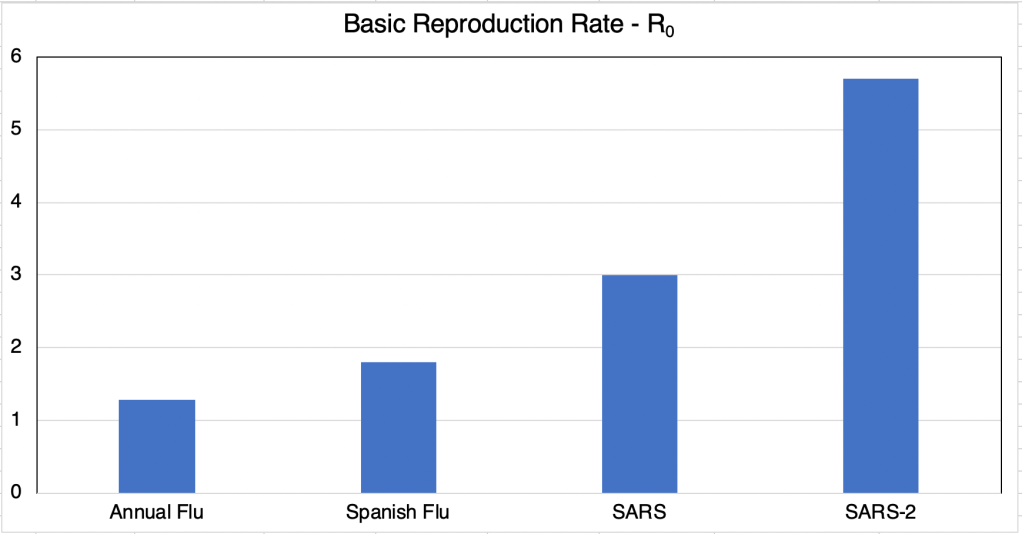
The R0 value (a measure of infectiousness, see my April 13th post) for the flu is 1.28. For SARS-2, it’s 5.7, 4.5 times higher!

The incubation time for the flu is 2-4 days, for SARS-2, it’s 2-14 days, and asymptomatic people are often contagious!

Yes, the fatality rate for both is impossible to know. And it’s probably over-estimated for both, since we don’t know the number of infected people with mild to moderate symptoms for either disease. But estimates are that the fatality rate for the typical flu is 0.14%. The current rate for COVID-19 in the US is 5.36% (deaths/confirmed cases), 38 times higher.

In short, SARS-2 is not the typical flu.

We have to concede that in an event like this one, there are many valid interests that are in some ways are opposed to each other. People at risk want to stay safe. Doctors and nurses want to treat their patients, but also face constant exposure of themselves and their families to the virus. Those in government do not want to expose their constituents to unnecessary risk. On the other hand, many have lost their jobs and need to get back to work. Mental health workers worry that their patients cannot withstand prolonged isolation and stress. Employers wonder if they have to lay off more people or close their businesses. All of these are real concerns, and they can’t be dismissed.

It will be difficult moving forward to strike a balance between these competing interests, and no solution will be perfect. We need to understand that most are doing their very best to manage a very difficult situation. There is lots of blame to go around, but remember that the nature of the virus has never been completely clear. For myself, I gave a talk at my church on March 13th (Posted here on March 18th). During the previous week, I was trying to determine if the virus was spread by droplet transmission (coughing and sneezing), or by aerosol transmission (shouting, laughing, singing, even talking). At the time, most outlets including the CDC said it was only spread by droplet transmission, but a few scientists were warning that it may be aerosol. Should I really be giving a talk on virus safety to room full of people? It appeared at the time that it would be OK, so I moved forward. Luckily for me, the decision was made to cancel gatherings, and my talk was recorded for the web. As it turned out, the SARS-2 virus is much more infectious that originally thought (see my post from April 13th), so add me to the list of people who were wrong! Thank God I didn’t have a crowd in the room during my talk!

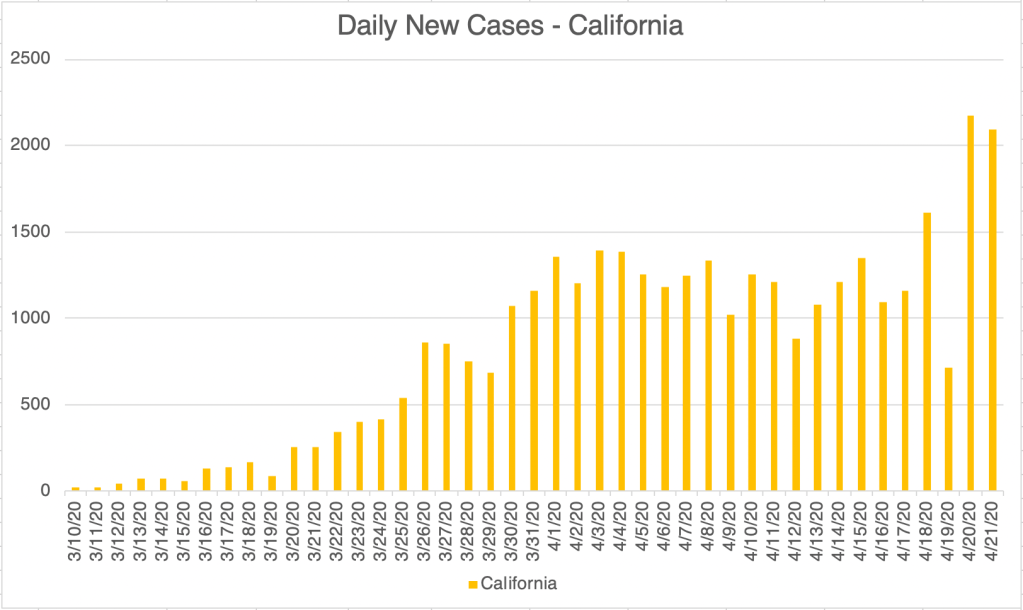
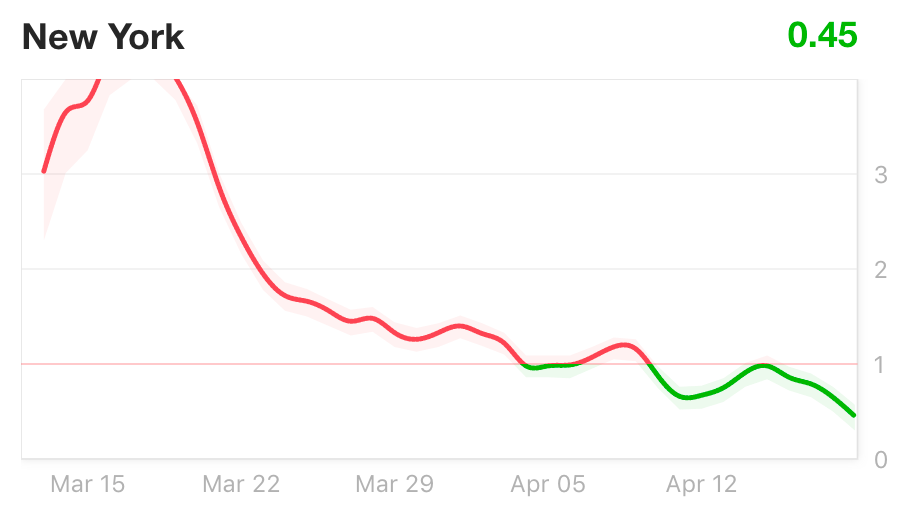
Again, I am not an epidemiologist, I am a molecular biologist specializing in infectious disease. But in my informed opinion, reopening the economy without great care is a mistake. A similar experiment has already been done. On March 11th, California Governor Gavin Newsom banned large gatherings including sporting events, church services, and university classes. On the same day, New York Mayor Bill De Blasio was encouraging people to eat out and enjoy themselves. As of this writing (April 19th), California has 31,000 confirmed cases, and New York City alone has 138,000, more than all but 6 countries (yes, I’m including China, the Chinese Communist Party is almost certainly heavily under-reporting their case load)1. For a time, New York hospitals were overwhelmed, and bodies were being temporarily buried on Hart Island. This is the possible consequence of going back to normal too quickly! If you choose to gather in large groups during this time (for example at protests in downtown San Diego), I would strongly encourage you to take extra care to isolate yourself from those at risk or those who may come in contact with them.

I am less sympathetic to those who want to get back to normal just so they can go to Disneyland or to their favorite restaurant. As we reopen the economy, we have to do so carefully. Theaters, restaurants, and amusement parks are among the last things that should be reopened.

We will need have adequate testing and hospital capacity to handle the additional case load. Each area will be different in this regard, and New York City should not be treated the same as Ennis, Montana. We will also need to have grace for one another, as well-intentioned mistakes will be made along the way. Ideally, we should also have contact tracing, contacting those potentially exposed to an infected person. This practice, along with aggressive testing, was used very effectively in Taiwan, So. Korea, and Singapore, to minimize caseload. Unfortunately, we are not yet able to do contact tracing in the US.

While I am very sympathetic to individual rights, and am in general for small government, we may need to voluntarily lay down certain rights for a time in order to protect each other. Pray for our leaders, regardless of party, and take care of each other!

I’ll have another post soon on the topic of antibody testing.

Don’t fear, but be smart!
Erik

Workers temporarily bury bodies on Hart Island in New York City

1 Editor’s note: As of the date of posting, the statistics here were correct. As of July 7, 2020, however, the situation has reversed. New York State as 398k confirmed cases, California has 284k confirmed cases. New York state daily cases are trending downward, while California daily cases have been trending upward.

Case Update: April 13th

Originally posted April 13th, 2020, on Facebook

Friends!

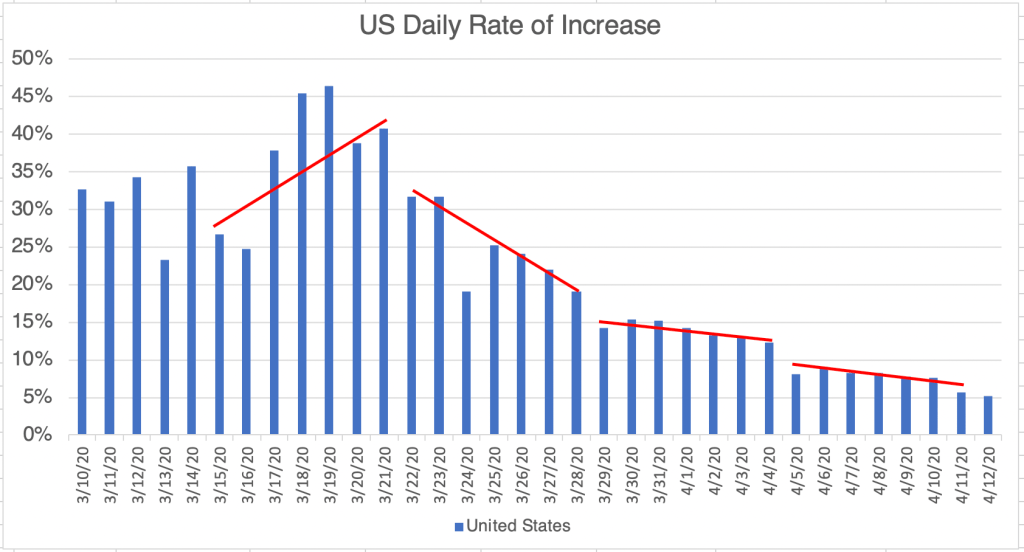
I have another good news/bad news post for you today. First the good news. Yesterday, 8pm on April 12th, the rate of new infections for the world, the US, California, and San Diego County, were all below 5%! Our efforts are paying off!

Some of you may wonder if this is a Sunday Effect, a lowering of new case numbers just because it’s a Sunday, and there may fewer people performing tests that day. While it’s certainly true that there have been fewer new cases on Sunday, I noticed that in past weeks, a Sunday drop has often been followed by a lower rate for the entire next week. Last week for example, the rate was below 10% on Sunday, a big drop, but remained low for the entire next week. If this trend holds, then we may have rates near 5% for the entire next week.

The bad news isn’t really new, but rather a new study of the Basic Reproductive Number (R0). This number is a measure of infectiousness and is an attempt to calculate the average number of people that an infected person will pass the virus to. For a typical flu, this number is 1.28. For the first SARS virus in 2002, it was around 3. As recently revealed in a pre-publication paper [Sanche et al. High Contagiousness and Rapid Spread of Severe Acute Respiratory Syndrome Coronavirus 2. July 2020, pre-print captured April 13th, 2020. Em. Inf. Dis. 6(7)], the actual R0 value is 5.7, twice as high as originally thought, and 4.5 times more infectious than the typical flu.

Early on, there was a lot of discussion on whether this virus was spread by droplet transmission (coughing and sneezing) or by aerosol transmission (singing, laughing, shouting, even just talking). The new paper, along with several stories in the news, suggests that SARS-2 is indeed spread at least to some degree by aerosol transmission.

So here’s the take away from this post. We are doing better, but we’ll have to be very careful how we “go back to normal”. The virus has the potential of springing back to life if we just go back to normal right away. If people are to go back to work anytime in the next few weeks, we will need to remain diligent, yes, possibly wearing masks at work, and do wider spread testing to find infected people. Stay tuned on this evolving situation!

Don’t fear, but be smart!
Erik

PS Pre-published journal articles have not yet received final approval and may change before publication!

Case Update: April 9, When can we go back to normal?

Originally posted April 9th, 2020 on Facebook

Friends,
You may have heard lots of positive news in the press in the last few days about new lower rates of new infections in the US. If you saw my posts on March 30th and April 1st, you know that I was enthusiastic about some good news a little earlier than was warranted. So I wanted to wait a few days to see if the current positive trends would hold.

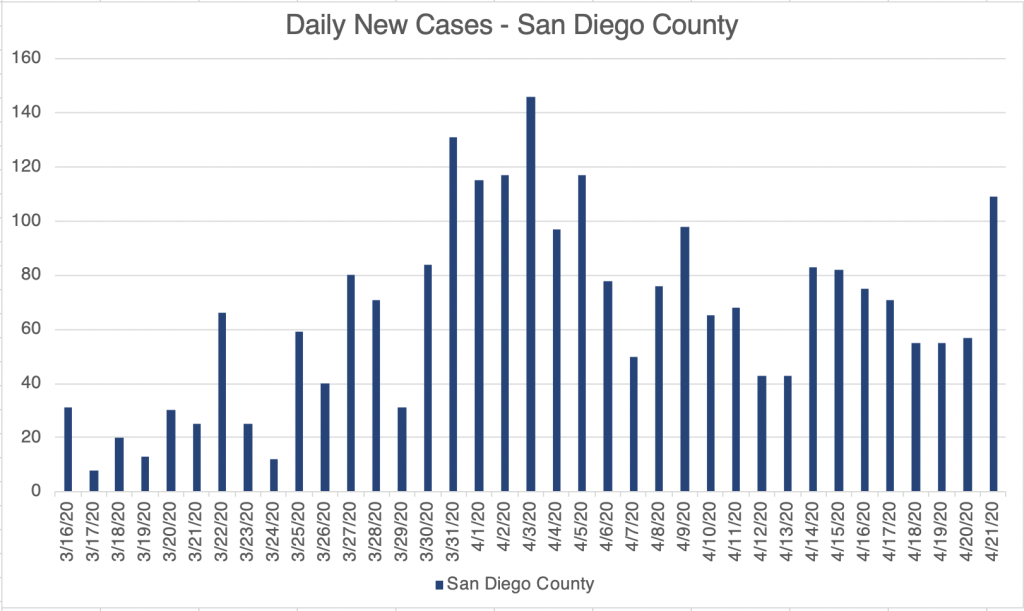
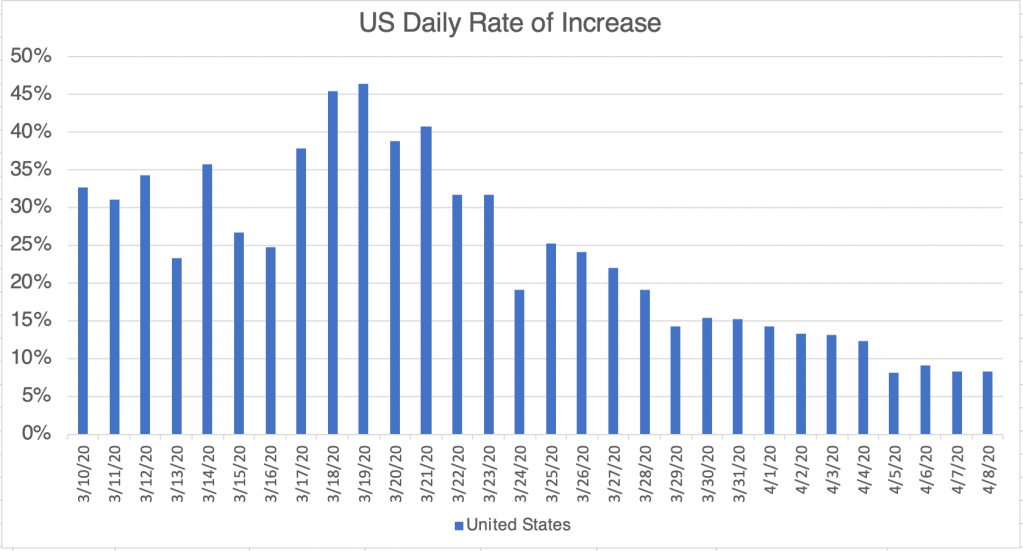
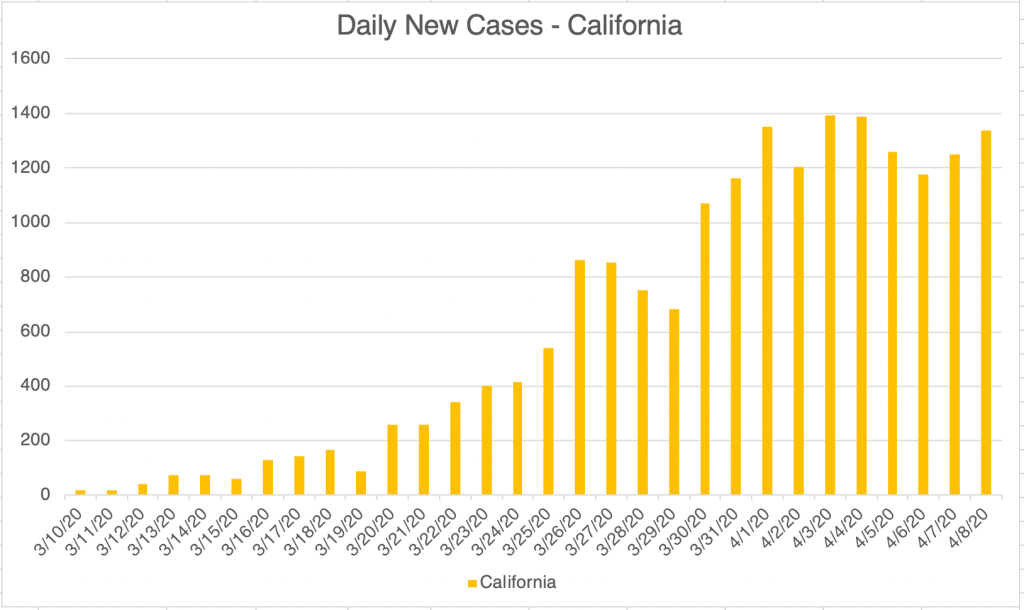
All that being said, I do have good news for you today! For the World, the US, California, and San Diego County, the rate of new cases as been below 10% every day since Sunday, April 5th! That’s great news. The actual daily new cases has been trending basically flat in the US since Sunday, and in California since April 1st. So the news is definitely good! There is even better news if you live in San Diego County. Daily new cases actually appear to have peaked on April 3rd, and are actually down since then.

Some in the media are discussing an end to our isolation, but I have to say that it is still very important that we continue to practice social distancing for a while longer. Our efforts are working, but we still have a lot of work to do!

My brother asked me when I thought it would be safe to go back to normal. I’ll preface my opinion by saying that I am not an epidemiologist. My opinion on this is informed, but I’m not an expert. In my opinion, we can go back to normal when:

  1. Our daily new cases are very low, a few a day.
  2. We can be reasonably certain that we know where every sick person is located, and that they are isolated.
  3. That we have enough testing capacity that we can test those who have been potentially exposed, not just confirming cases that appear to be COVID-19 cases by symptoms.

You can see that we have quite a ways to go to achieve these 3 criteria. So it’s important that we remain diligent! It is highly likely that we will experience a second wave of infections if we try to go back to normal too early.

A local physician told me last week, April 1st that wait times for testing was 12 days. Yesterday, Wednesday, April 8th, he said that results were coming back in just 2 days. So with new cases falling, we are able to test much faster. This will eventually give us capacity to test for exposure! I don’t know if public health officials are considering this yet.

So be encouraged, but be diligent! Your efforts are paying off!

Don’t fear, but be smart!
Erik

Hugs, not Drugs: Oxytocin and Stress Reduction

Originally posted on April 7th, 2020

Friends,

I still have some science for you today, but from a little different angle. Many of you know that we make a hormone, Oxytocin, that makes us feel good and is produced when we make physical contact with the people that we love, spouses, family, friends, etc. I was listening to a podcast the other day, in which a scientist was talking about how many of us are experiencing extra stress these days either because of isolation, or perhaps because of overexposure to some of those same loved ones! 😬

This scientist recommended 2 things: First, a 20 second hug every 2 hours! This produces Oxytocin, lowers Cortisol, the stress hormone, and makes us feel better. Your teenagers may think it’s totally weird, but I think they may secretly like it!

Second, he also said that we also get a shot of Oxytocin when we meet an old friend, or simply make eye contact with someone we care about. So when interacting with friends on line, seek to de-emphasize Facebook (yes, I get the irony), email, and phone calls, and emphasize FaceTime, Zoom, or some other tech that allows eye contact! This is especially important for those who are isolated during these times!

I checked all this with Dr. Scott Bunner, a psychiatrist friend of mine, and he said the hugging thing is pretty well known. He hadn’t heard of the eye-contact thing, but that it made sense to him.

So give grandma a FaceTime call! If you’re in the position to do so safely, help an elderly person get set up for Zoom! It will help us all get through this!

Don’t fear, but be smart!
Erik

Are We Flattening the Curve?

Originally posted April 3rd, 2020 on Facebook

Friends,

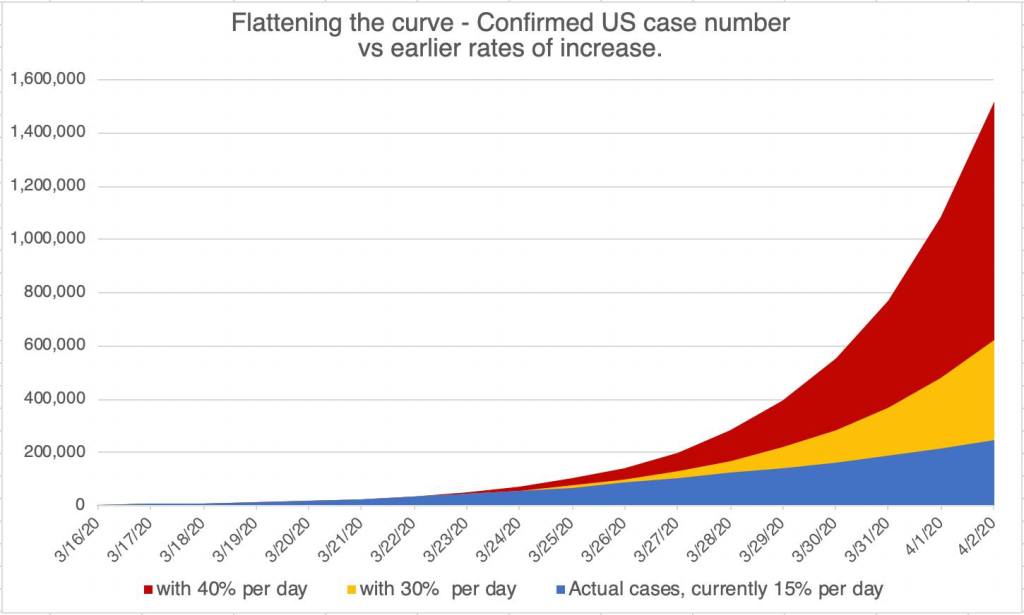
Is our isolation helping? In mid-March, the rate of increase of new confirmed cases was around 40%. Yesterday it was around 15%. I made this graph of what the case load in the U.S. MIGHT have been if we were not in our homes.

It may seem like you’re wasting your time, but you are helping! Many people AREN’T sick today because of our efforts. So keep it up!

Don’t fear, but be smart,
Erik

Thanks!

Originally posted April 3rd, 2020

Of course, the medical community deserves a lot of thanks for the long hours, and extra exposure during this time!

But I also want to thank grocery store workers, truck drivers, take out restaurant staff, and others who are keeping us fed and well during this time.

Thank you!
Erik

Case Update: April 1st

Originally posted April 1st, 2020

Friends,
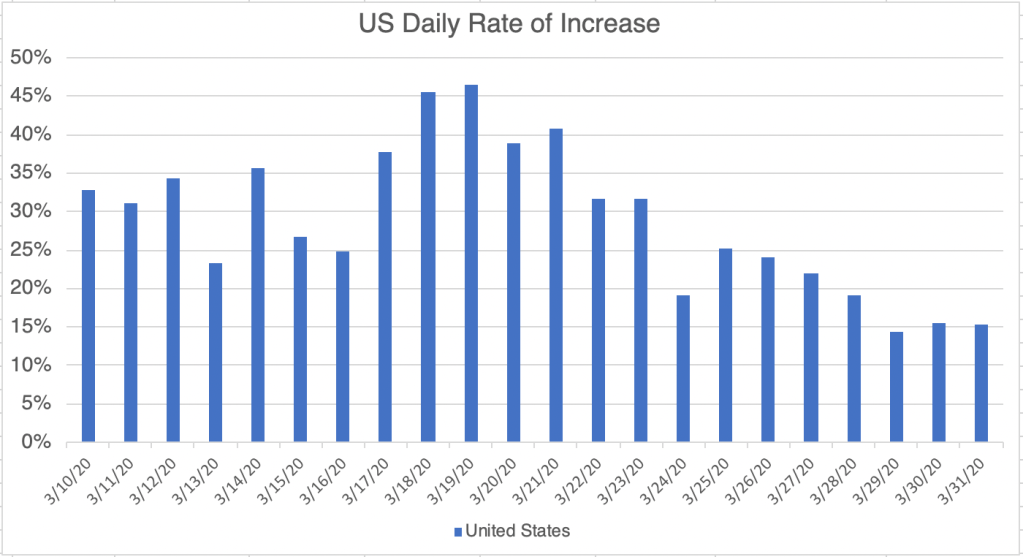
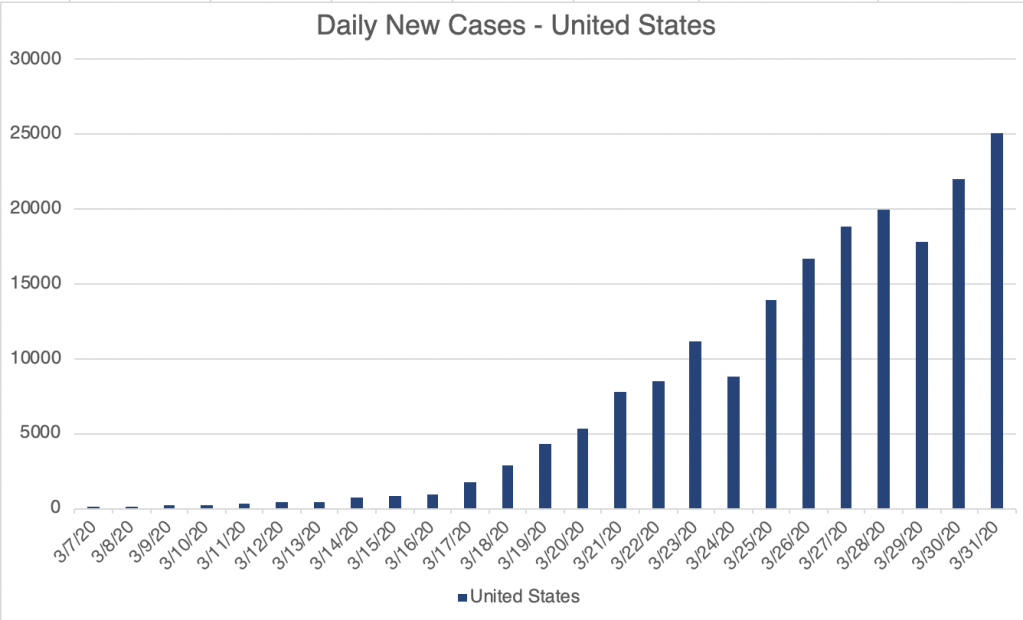
I have to moderate my enthusiastic post from a few days ago some good news/bad news information. The good news is, for both the US and California, the rate of new cases is still trending down and is now below 20% for both regions. Unfortunately, even with the lower rate, the total number of new cases is still increasing after a short pause. It is definitely increasing at a slower rate, and that’s good, but increasing nonetheless.

Some have asked, how are these number affected by the new testing? It’s hard to say. The US is definitely doing more testing, and bringing more on line all the time, but our testing is still not adequate to capture all the information we need. There are still certainly a lot of cases we don’t know about, especially among asymptomatic and pre-symptomatic people. So even if you don’t have symptoms, it’s still important to keep your distance from others.

Others have asked about the new drug treatments that President has been enthusiastic about. Keep in mind that the medical field is highly regulated, and scientists and regulators are very slow to say a piece of equipment, test, or drug works until rigorous testing has been completed. So is the President right in saying these new drugs show promise, or is Dr. Fauci right in saying we don’t know yet. Well, they both are. The President is being hopeful, citing trials by physicians in other countries and in the US, and Dr. Fauci is expressing caution that the drugs have not been rigorously tested. Both things are true. The FDA recently approved the use of these drugs in trials here, and physicians in the US are always allowed by their credentials to use drugs off label. So testing is being done, and hopefully, we’ll have something that can be used widely soon.

Stay safe, my friends!
Erik

Case Update: March 30th

Originally posted March 30th, 2020

Friends!
Lots of good news today! The trend of lower rate of new infections has continued for the US. In fact, yesterday March 29th, we had fewer new cases than the day before. I’m hopeful that this trend will continue and we are finally on the way out of this.

Good news for my home state of California as well! We’ve actually had fewer new cases each day for the last 3 days!

What this all says is that the social distancing we’ve all been doing is working, and we are finally starting to get control of the virus. Your sacrifice is paying off!

What I’m hoping and praying for next is that this trend will continue, and that we will be able to start testing for exposure, not just testing those who already appear to have COVID-19 symptoms. Then we’ll really start to have a better idea how the virus is spreading.

So keep up the great work!

Don’t fear, but be smart!
Erik

Protecting Your Family – Dr. Dave Price

Originally posted on March 29th, 2020

This is a somewhat lengthy video which is very popular. This is an NYC doctor making a video for his family. He says a lot of the same things you’ve been hearing, but with a few twists.

First, while you can get infection from the air, as suggested by scientific journals, but only by sustained contact with a sick person. He thinks it’s fine to go shopping or go for a walk, if you follow the following rules:

  1. Wash your hands if you touch things. Touching your face with dirty hands is the main route of infection.
  2. Don’t touch your face with dirty hands!
  3. If you go out, where a mask, any mask. Most masks don’t do a very good job of protecting you from airborne virus, what they do is remind you not to touch your face! So any mask will do for this.
  4. Stay at least 6 ft from people.
  5. Have a small social circle, don’t be in large groups
  6. If you’re sick, isolate yourself from your family. Follow the above rules when interacting with your family.

He also says anyone older than 14 can get sick! Yes, older people are most affected, but plenty of people in their 20s and 30s are getting sick.

He also says that while asymptomatic people are spreading disease, those that do will probably themselves be sick 1-2 days later.

All of this is one guys experience, but I think it’s valuable.

Stay safe! Our efforts to protect each other are working!
Erik

COVID-19 Protecting Your Family with Dr. Dave Price

Rate of New Cases Down, US Confirmed Cases Surpass China’s

Originally posted March 28th, 2020

Good morning, Friends,
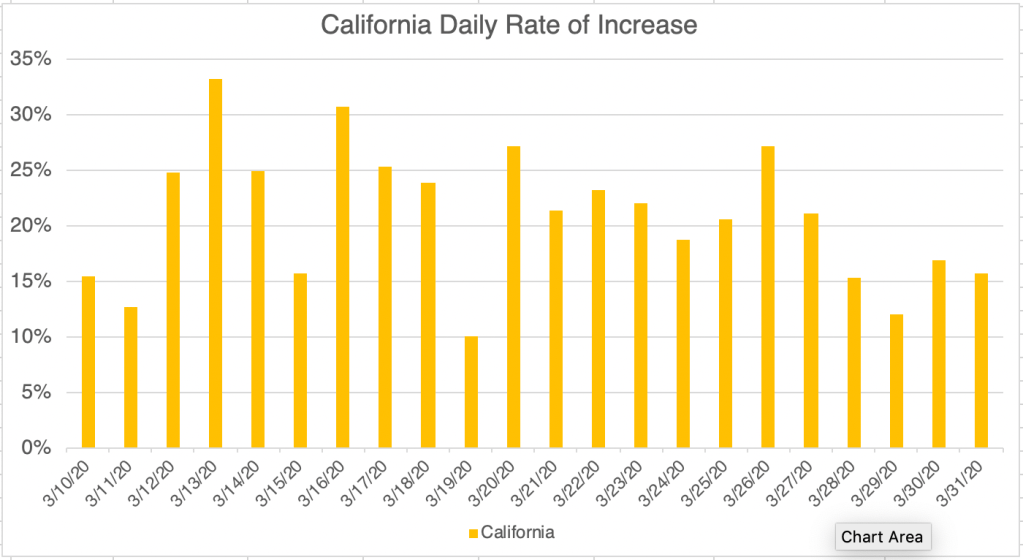
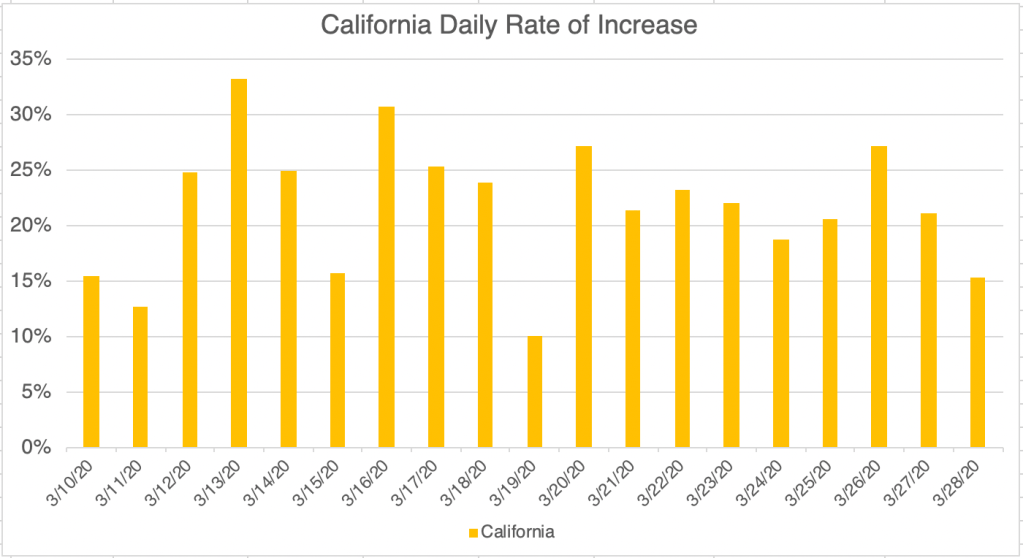
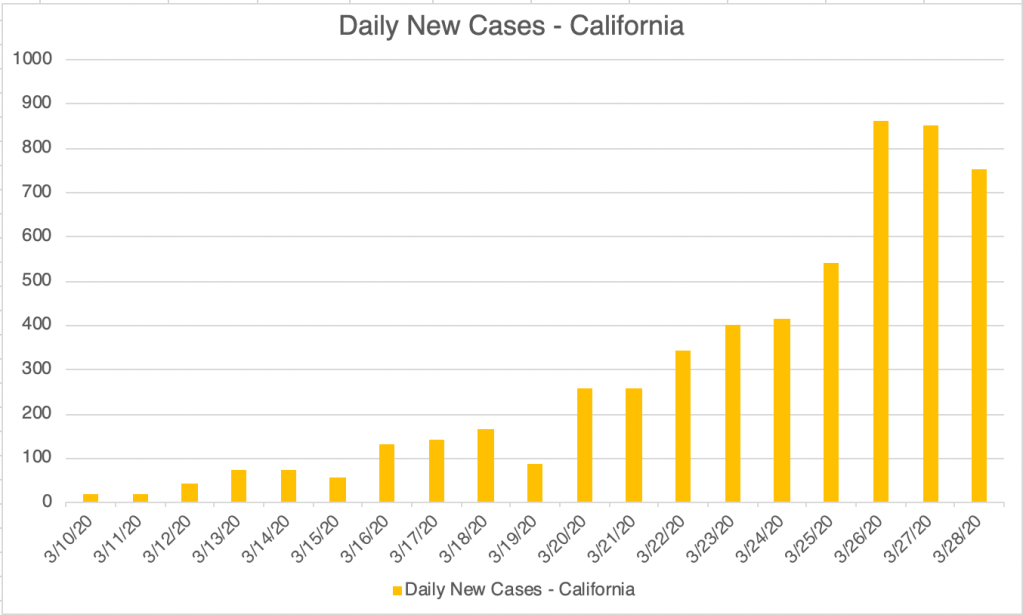
It’s good and bad news this morning. The good news is, our recent trend of a reduction in the rate of new cases in the US is holding! We’ve gone from being consistently in the 40% range, to consistently in the 20% range. This is good, but the bad news is, because our numbers are getting high, a lower daily percentage of new cases still means an increase in daily cases. Plus, in California, where many of you live, the rate has not trended down.

Unfortunately, the US now has more confirmed cases than any other country, surpassing China on Thursday.

So we doing better, but we need to to better still. The numbers are impacted by several things of course, one being our much improved testing rate. This certainly drives the numbers up, but I’m cautiously optimistic that the lock-down many you are experiencing will lead to big improvements soon. So keep it up! Your efforts are not in vain!

A few days ago, I mentioned that those with auto-immune disorders (like me) may be at higher risk. I still have not found an authoritative source for this. Since then, several news organizations have posted reports of people doing worse if they had taken non-steroidal anti-inflammatories (NSAIDs), including ibuprofen. Since auto-immune sufferers often take these medications, this may be part of the reason for their higher risk. This information is evolving, and will likely continue to change for awhile. Myself, I have quit taking one of my anti-inflammatory medications. Check with your doctor before you stop taking a prescription!

Don’t fear, but be smart!
Erik

PS If you’re wondering why testing in the US was so slow to get rolling, check out yesterday’s post.